
Making a Kids' Closet Work from Toddler Years to the Teen Years
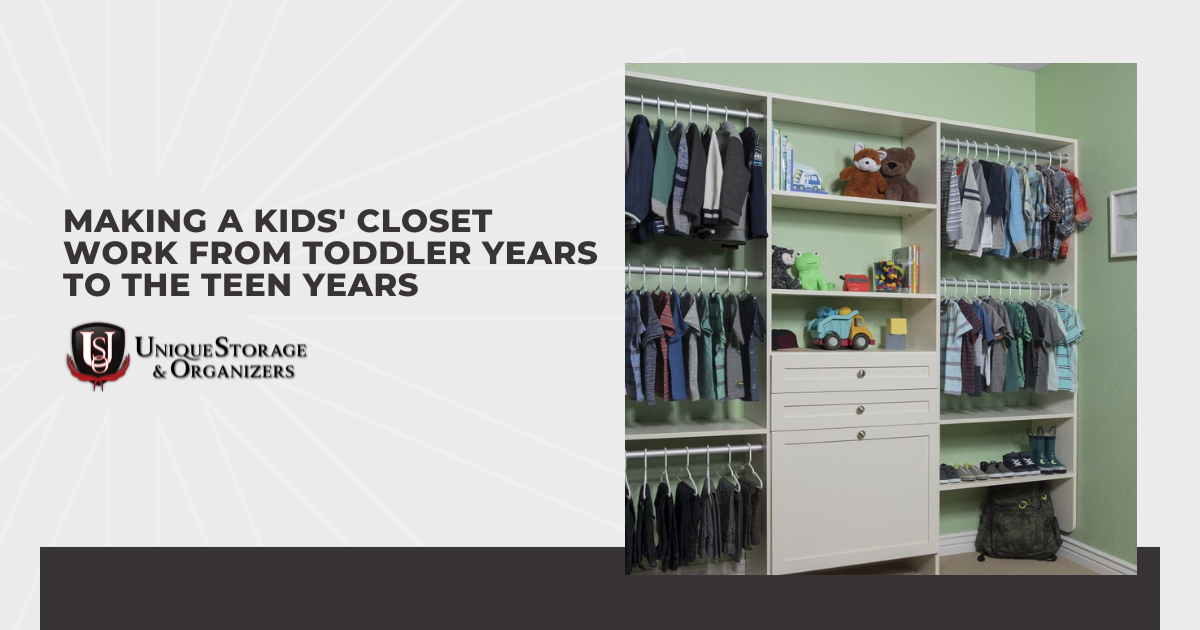
Most parents ask me the same thing when their child outgrows another round of clothes: do you really have to redo the closet every few years? My honest answer is no, and that is exactly what makes kids' closets so worth planning well from the start. Over the years, I have helped families set up spaces that hold tiny toddler outfits one season and a teenager's wardrobe the next, all without a single major overhaul.
You do not need a bigger closet to make this work. What you need is a layout that adapts as your child grows, one that holds up through every stage from the toddler years to the teen years. The right setup handles tiny shoes and training pants just as well as it handles hoodies, backpacks, and everything else that comes with getting older.
To avoid rebuilding the same closet every few years, these practical updates can help kids’ closets stay useful as your child moves from tiny clothes to teen essentials:
- Start with adjustable closet systems
- Create easy-to-reach storage zones
- Use bins for growing essentials
- Add double hanging space
- Label everything for daily independence
- Rotate clothing by season and size
- Build in shelves for changing needs
- Make room for hobbies and gear
- Keep the layout simple to maintain
From smart zones to everyday routines, each of these tips helps kids’ closets work harder now while staying ready for the next stage of growth.
Start with Adjustable Closet Systems
Kids grow fast, and their closet needs to keep pace without a full rebuild every couple of years. Adjustable closet systems let you move rods, shelves, and drawers as your child changes, which means one setup can serve them from toddlerhood through their teens. You save money, time, and the hassle of tearing things apart down the road.
Here's what makes adjustable systems worth the investment:
- Movable Rods and Shelves: You can raise or lower each piece as your child grows taller. That flexibility keeps daily items within reach at any age.
- Track-Based Mounting: Sections shift along a track instead of staying fixed to studs. You reconfigure in minutes, not hours.
- Add-On Components: You can slot in baskets, extra shelves, or drawers whenever needs change. Your closet expands right along with your kid.
One of the smartest choices I see parents make is picking a flexible system early instead of a fixed one. I've watched families rework the same closet three or four times over a decade with zero demolition, and it always pays off. Start with adjustable pieces, and you'll build a kids’ closet that adapts instead of one you outgrow.
Create Easy-to-Reach Storage Zones
Little kids love to do things on their own, and a well-planned kids’ closet gives them that chance. Set up low zones for the items your child uses daily, like pajamas, socks, and favorite shirts, so they can grab what they need without help. As your child gets taller, you simply raise those zones to match.
I also believe accessibility is one of the most underrated parts of good organization. When kids can reach their own things, they build habits early and lean on you less for every little task. You'll notice fewer morning meltdowns and a lot less of the "can you get it for me" routine.
Reserve the higher shelves for out-of-season clothes, backup supplies, or items only you should handle. Keep the middle and lower areas open for whatever your child touches most often. Your goal is a closet that works with your kid's height today and adjusts easily for tomorrow.
Use Bins for Growing Essentials
Small items disappear fast in a kids' closet, and bins bring order to the chaos. Hats, mittens, hair clips, and mismatched socks all need a home, and a good set of bins keeps them from scattering across shelves and floors. You can pull, swap, and rearrange them in seconds as your child's needs shift.
Pick bins that match how your child sorts and stores:
- Clear Bins for Young Kids: Little ones sort by sight, so see-through containers help them find things fast. They also make cleanup simple since everything's visible at a glance.
- Labeled Bins for Older Kids: Words and categories work well once your child reads. Each bin gets a clear purpose, which keeps clutter in check.
- Stackable Sizes: Mix small and large bins to fit different items and spaces. You stack them up when floor space runs tight.
I like how bins stay visible, because that helps you keep better track of what you already own. You buy fewer duplicates and waste less money on things buried in a corner. Choose sturdy, stackable options, and your storage stays flexible for years.
Add Double Hanging Space
Toddler clothes are short, which means you're wasting half your rod space if you hang them the usual way. Double hanging space fits two rods where one normally goes, instantly doubling room for tiny tops, dresses, and jackets. You get far more storage out of the same closet footprint.
As your child grows into longer clothing, you just remove the lower rod to make space for dresses, pants, and coats. One of the easiest wins I recommend is doubling up while clothes are small, then scaling back as your child gets taller. It's a simple move that keeps the kids’ closet full and functional at every stage.
Pair a double rod with a few bins or shelves below for shoes and folded items. You'll use nearly every inch of vertical space instead of leaving it empty. Plan for this early, and you'll never feel cramped during the toddler years.
Label Everything for Daily Independence
Labels turn a closet from a mystery into a system your child can actually run. When each bin, shelf, and drawer has a clear label, your kid knows exactly where things belong and where to find them. Cleanup gets faster, and the guesswork disappears for everyone.
Match your labels to your child's age and reading ability:
- Picture Labels for Toddlers: Simple images show where socks, shoes, or toys go. Kids who can't read yet still put things away on their own.
- Word Labels for Older Kids: Clear text keeps things organized once your child reads. They learn to sort and maintain the space without reminders.
- Combo Labels for the In-Between: Pictures and words together bridge the gap as reading develops. Your child grows into the system instead of outgrowing it.
I've found that clear labels do more for daily independence than almost any other change. Kids follow a system they understand, and you spend less time redirecting them. Label thoughtfully, and you hand your child ownership of their own space.
Rotate Clothing by Season and Size
Closets fill up fast when you try to store every size and season at once. Regular rotation keeps only the current, wearable clothes front and center, which makes mornings simpler and the space far less cluttered. You swap items in and out as the weather or your child's size changes.
Store off-season and too-big clothes in labeled bins on high shelves or under the bed. When the season turns or your kid hits a growth spurt, you bring those items down and clear out what no longer fits. I keep a small donation bin going year-round so outgrown pieces leave the closet instead of piling up.
Rotation also gives you a clear view of what your child actually has. You spot gaps before shopping and avoid buying things you already own. Build this habit twice a year, and your kids’ closet stays tidy without a big overhaul.
Build in Shelves for Changing Needs
Shelves are the workhorses of any growing closet. They hold folded clothes, shoes, books, and eventually a teen's stack of hoodies and gym gear. Adjustable shelving lets you change the spacing as items get bigger and needs shift over the years.
One thing I always tell families is to add more shelves than you think you'll need right now. Kids accumulate stuff at a surprising rate, and empty shelf space today becomes packed storage tomorrow. You'll be glad to have room ready when your child's collection grows.
Space your shelves to fit what your child stores at each stage, then adjust as those items change. Lower, closer shelves suit small folded clothes, while taller gaps handle bigger boxes and gear later. Plan for flexibility, and your shelves keep working no matter what your kid is into.
Make Room for Hobbies and Gear
A kids’ closet holds more than clothes once kids get older, and their interests need a home too. Sports equipment, art supplies, instruments, and school projects all pile up, and without a spot, they end up scattered across the bedroom floor. Planning for hobbies keeps the whole room calmer.
Below are ways on how to carve out space for the gear your child collects:
- Open Floor Space for Bulky Items: Leave room for backpacks, sports bags, or bins of equipment. Kids grab and stow their gear without a struggle.
- Hooks for Quick Access: Mount hooks for bags, jackets, or helmets your child uses often. Everything hangs in plain sight and stays off the floor.
- A Deep Shelf for Supplies: Reserve one sturdy shelf for art kits, craft boxes, or project materials. Hobbies get a dedicated home instead of taking over the desk.
I've seen how a dedicated hobby zone keeps the rest of the room from turning into a dumping ground. Each interest gets its own spot, so cleanup feels manageable for your child. Make space for what your kid loves, and the whole room stays more livable.
Keep the Layout Simple to Maintain
The best kids’ closets are the ones your child can keep tidy on their own. Too many zones, fussy dividers, and complicated systems only make cleanup feel overwhelming, and kids abandon anything that's hard to follow. Simple, clear spots for clothes, shoes, and extras win every time.
I tell parents that a layout your child understands is a layout that stays neat. When cleanup feels doable, kids actually do it, and you stop being the only one who keeps the space in order. Stick to a few obvious categories instead of a dozen tiny ones.
Review the setup once or twice a year and trim anything that isn't working. Clear out what your child has outgrown and keep the system easy to follow at their current age. Keep it simple, and your kids’ closet stays functional from the toddler years right through the teens.
Conclusion
Your kids’ closet shouldn’t feel like something you have to fix over and over again. With the right planning, it can become a space that supports your family’s routines, gives your child more confidence, and keeps daily clutter from taking over. I always encourage parents to think beyond the current stage because childhood changes quickly. When the closet is built to adapt, you get a system that feels easier to live with year after year.