Organization Habits That Make Reach-In Closets Easier to Use Daily
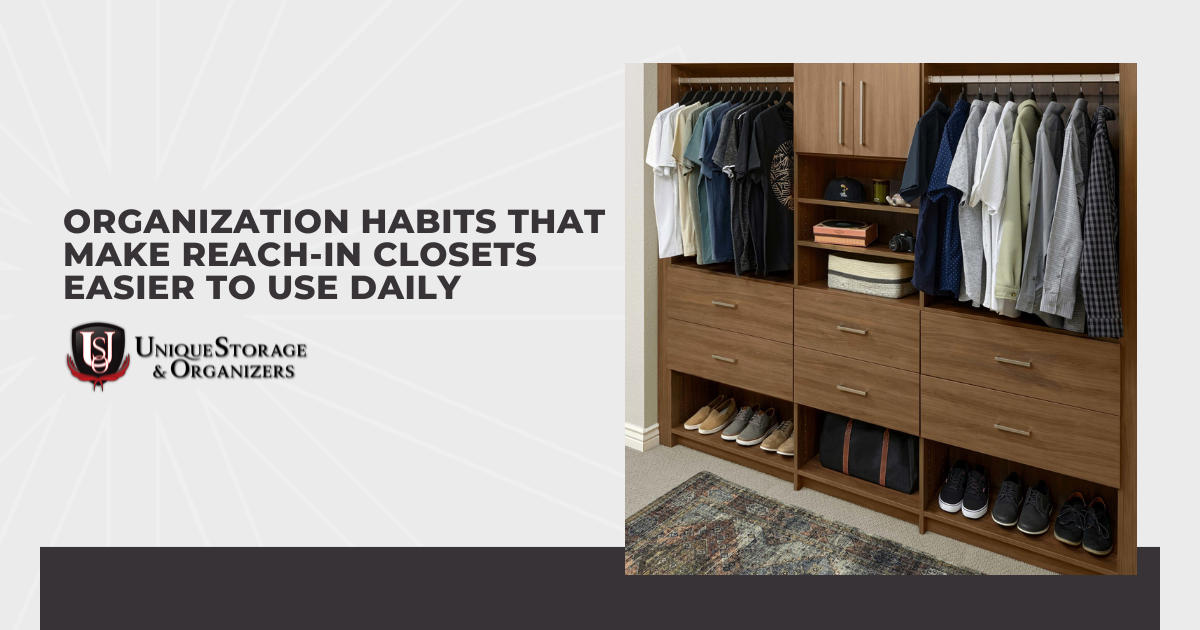
Reach-in closets are the quiet workhorses of most homes. They’re not huge, they’re not fancy, and they often get ignored until they become frustrating. I’ve worked with many homeowners who feel like their closet is “too small,” when the real issue is that it doesn’t have a consistent system behind it. With a few simple habits, reach-in closets can feel dramatically easier to use every day.
What makes reach-in closets tricky is that everything is packed into a narrow footprint. When you can’t see what you own, it’s easy to forget items, buy duplicates, or create piles that never quite make it back onto hangers. In my experience, what matters most is that your closet supports your routine, not that it looks perfect. With a few simple routines, your closet can stay functional and stress-free without needing big cleanup days.
Here are the organization habits that make reach-in closets easier to use daily:
- Keep only what you actually wear
- Assign zones based on your routine
- Use the one-touch rule to put items away immediately
- Store by visibility (most-used items at eye level)
- Create a simple folding standard for shelves
- Contain small items with bins, dividers, and trays
- Create a dedicated return zone for items in rotation
- Do a two-minute nightly reset
Even if you’re starting with a closet that feels overloaded, these habits can make a noticeable difference quickly. Pick one or two to start, and you’ll feel the space getting easier to use almost immediately.
Keep Only What You Actually Wear
One of the fastest ways to make reach-in closets easier is to be honest about what needs to live there. Your closet’s most accessible space should hold the items you reach for weekly, not the “maybe someday” clothing. When rarely worn pieces fill the rack, your everyday outfits get squeezed and become hard to find. I’ve seen a simple edit create breathing room considered “impossible” before.
A habit I recommend is a quick monthly scan for “non-players,” meaning the pieces you consistently skip. You don’t need to do a major purge; just move anything off-season, sentimental, or special-occasion to a separate bin or storage space. Think of your closet like a kitchen counter: only your most-used items should stay within arm’s reach. This keeps the closet focused on what you actually wear, which makes getting dressed faster and less stressful.
Assign Zones Based on Your Routine
Many people organize reach-in closets by categories like shirts, pants, and dresses, and that’s a fine starting point. But in my experience, organizing by routine is even easier to maintain because it mirrors how you actually get dressed. Instead of sorting by clothing type alone, think in terms of “what do I grab most often” and group items accordingly.
Here are a few closet zones that work well for most reach-in closets:
- Workwear
- Weekend basics
- Workout gear
- Outerwear
- Shoes
- Accessories
The habit that makes zoning work is returning items to their zone every time. This is where small systems help, like a basket for gym gear or a shelf that’s always for handbags, because they guide you naturally. If you share the closet, a label or two can keep everyone aligned without nagging.
Use the One-Touch Rule to Put Items Away Immediately
The one-touch rule is one of my favorite habits because it prevents clutter before it starts. Instead of taking something off and placing it on a chair or the floor “for later,” you put it where it belongs right away. Reach-in closets don’t have room for in-between piles, so those small stacks quickly become a bigger mess. One-touch keeps your closet from slowly unraveling during a busy week.
This habit becomes easier when the closet is set up to support it. If your hamper is too far away, laundry piles up, so place it near the closet. If jackets always end up on a chair, add a hook or two where you naturally drop them. When every item has a clear home, putting it away becomes the easiest option, not the harder one.
Store by Visibility (Most-Used Items at Eye Level)
Reach-in closets function best when the items you use most are the easiest to see. Eye-level space is prime real estate, and it should hold your most frequently worn clothing. When daily pieces are buried behind rarely used items, it’s easy to forget what you own and default to the same outfits. Visibility reduces decision fatigue because you can scan and choose quickly.
If you’re not sure what should go where, a simple “visibility rule” usually helps:
- Eye Level: everyday tops, pants, and grab-and-go basics
- Upper Shelves: seasonal items, special occasion pieces, backups
- Lower Areas: heavier items, bins, and shoes that are easy to reach
A simple habit is doing a seasonal swap of what lives at eye level. When the weather changes, move your current-season staples forward and shift off-season items to a high shelf or separate bin. The goal isn’t a showroom look; it’s making your reach-in closet feel intuitive.
Create a Simple Folding Standard for Shelves
Shelves can be a huge help in reach-in closets, but they can also be where clutter quietly multiplies. The most common issue I see is inconsistent folding, which leads to wobbly stacks that collapse easily. Once one pile falls, people stop trying to maintain it, and the shelf becomes a catch-all. A basic folding standard prevents that chain reaction.
Consistency matters more than perfection here. When items are folded to a similar size, stacks stay stable and look cleaner with less effort. For T-shirts and knits, file-folding can be especially helpful because you can see everything without lifting a stack. Over time, this simple approach keeps shelves from turning into a constant re-do.
Contain Small Items with Bins, Dividers, and Trays
Small items are often what make reach-in closets feel cluttered, even when your clothing is under control. Belts, socks, scarves, jewelry, and accessories don’t naturally stay tidy without a boundary. When they’re loose on shelves, they spread and create visual noise. That “messy look” can make the whole closet feel harder to manage.
Containment is the solution, and it doesn’t have to be complicated. I like to match the container to the item so it’s easy to keep up with:
- Shallow bin for everyday accessories
- Drawer dividers for socks and undergarments
- Tray for watches, jewelry, or small daily items
- Small basket for belts and scarves
The habit that keeps it all working is a quick weekly reset: just returning anything that drifted out of place. Once small items have a home, they stop taking over your reach-in closet. When the little stuff is contained, the closet feels calmer instantly.
Create a Dedicated Return Zone for Items in Rotation
Most people have items that don’t fit neatly into “clean” or “dirty,” like jeans worn once or a sweater you’ll wear again. Without a system, these pieces end up draped over a chair or tossed onto a shelf, and then they multiply. In reach-in closets, that “in-between” clutter can block access to everything else. A return zone gives those items a controlled home.
A return zone can be as simple as one hook, one basket, or one shelf. The key is keeping it small so it doesn’t become a dumping ground. If the return zone is full, it’s a cue to either do a quick reset or move something to laundry. This habit keeps your closet realistic for daily life while still staying neat.
Do a Two-Minute Nightly Reset
If I had to choose one habit that makes the biggest difference in reach-in closets, it would be a quick nightly reset. Two minutes is enough to hang up a few items, return shoes to their spot, clear the floor, and put anything loose back into its container. It’s not a deep clean but a quick reset that prevents tomorrow’s clutter. This tiny habit keeps small messes from becoming big ones.
If you want a simple reset routine that’s easy to remember, keep it to a short checklist:
- Hang up three to five items.
- Put shoes back in place.
- Toss laundry into the hamper.
- Return accessories to their bin or tray.
- Clear the closet floor.
I recommend pairing the reset with something you already do, like brushing your teeth or setting out clothes for the next day. Habit stacking makes it easier to remember and easier to maintain. Once it becomes routine, your closet stays consistently usable without extra effort.
Conclusion
Reach-in closets don’t need to be large to work really well. I’ve found that when you build habits around visibility, routine, and simple containment, the closet starts to feel easier to use almost on its own. If you’re not sure where to start, choose one habit that feels doable, like zoning or the two-minute reset, and build from there. With a few small shifts, your reach-in closet can stay tidy, predictable, and genuinely easy to use every day.