
What’s the Best Surface for Garage Workbenches
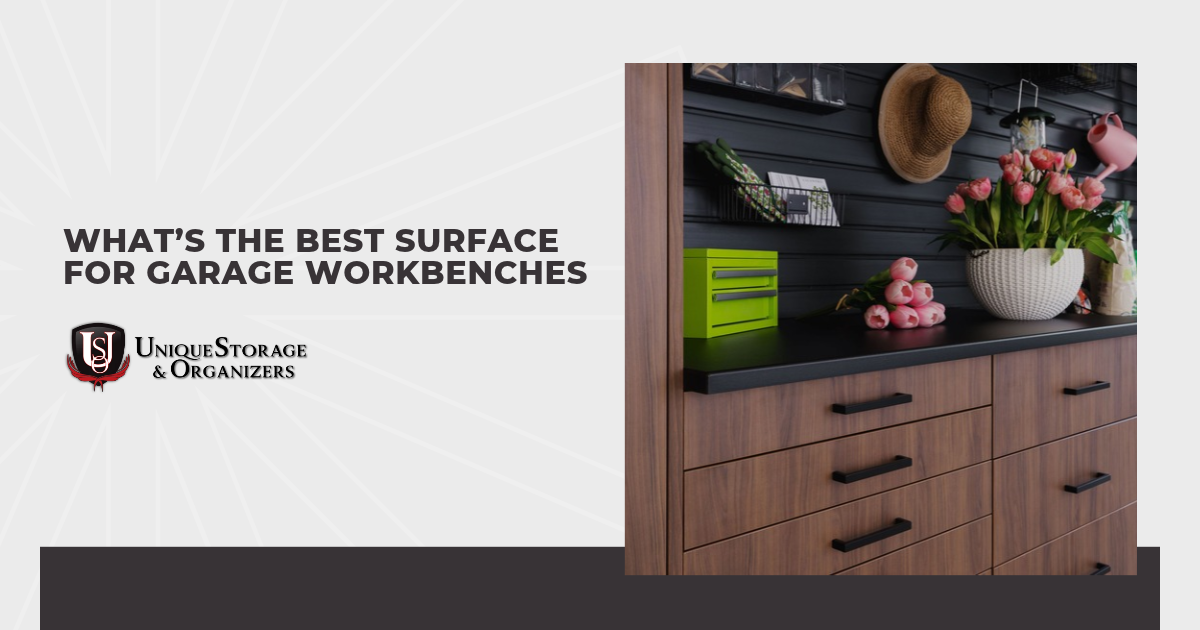
When you're looking for garage workbenches, size and price usually come first, but the top surface is what decides how well the bench holds up over time. In my experience, the wrong material shows its flaws fast in a Vancouver garage, where damp air can warp wood and rust bare metal. Even a small oil spill can leave a permanent stain if your surface isn't built to handle it.
The best surface is the one that matches how you actually use your bench. If you do general DIY or woodworking, butcher block or sealed plywood are solid choices, while stainless, galvanized, or powder-coated steel holds up better if you're working on vehicles or heavy equipment. Getting that material right changes everything about how your workspace actually feels to use.
With Vancouver's damp air, the wrong bench top can warp, rust, or stain within a single season. Before you spend a dollar, compare these seven surfaces side by side:
- Solid wood and butcher block: the classic favorite
- Plywood: the budget-friendly workhorse
- MDF and hardboard: smooth, affordable, and easy to replace
- Laminate: a clean look that's easy to wipe down
- Stainless steel: built tough for heavy-duty jobs
- Galvanized and powder-coated steel: strength with rust protection
- Phenolic resin and composite tops: pro-grade performance
Every surface for garage workbenches comes with its own strengths and trade-offs, so keep reading to find the one that holds up to your projects and our damp coastal weather.
Solid Wood and Butcher Block: The Classic Favorite
Few surfaces bring the same warmth and sturdiness to a garage workbench as solid wood, handling hammering, clamping, and sawing without complaint. Maple, beech, and oak are popular picks because their tight grain resists dents better than softer species like pine. Butcher block adds stability by gluing strips of hardwood together, which helps limit cracking and twisting. You'll also find it easy to mount a vise or drill holes for bench dogs right into the top.
Moisture is the real weak spot, especially in a Vancouver garage where humidity swings with the seasons. I always tell clients to seal both the top and the underside, since an unfinished bottom absorbs damp air and causes the slab to cup. Tung or Danish oil soaks into the grain and keeps the wood looking natural. For tougher protection against paint and glue, a few coats of polyurethane work well.
Scratches and stains will happen, but wood forgives you in a way few surfaces can. Light sanding and a fresh coat of oil can erase years of wear in a single afternoon. Expect to spend more upfront, since quality butcher block costs noticeably more than plywood or MDF. If you want a bench that looks better with age, it's worth the investment.
Plywood: The Budget-Friendly Workhorse
For builders on a budget, plywood offers solid strength at a fraction of the cost of hardwood. Its cross-layered veneers resist warping and splitting, so it stays flat under heavy loads. I usually recommend 3/4-inch Baltic birch or cabinet-grade sheets because they have fewer voids and a smoother face than standard construction plywood. Glue and screw two layers together, and you'll get a thick, rigid top that barely flexes.
Edges are where plywood shows its age first. Exposed layers soak up moisture and can delaminate if you leave them bare. Hardwood edge banding or a simple strip of trim protects those edges and gives your workbench a cleaner finish. Seal the whole surface with polyurethane or paint to keep spills from sinking in.
One of plywood's biggest perks is how easy it is to swap out. Once the surface gets gouged, stained, or riddled with drill holes, you can unscrew it and drop in a new sheet for far less than a hardwood top. I like adding a thin sacrificial sheet on top so the main layer underneath stays protected. It's a smart pick if you're building your first bench or need a top that can take some abuse.
MDF and Hardboard: Smooth, Affordable, and Easy to Replace
For precise layout, assembly, and finishing tasks, you want a surface that's perfectly flat with no knots or grain to snag your work. That's exactly what MDF, or medium-density fiberboard, delivers. It's made from compressed wood fibers and resin, so it stays dense and stable for precise layout, assembly, and finishing tasks. Hardboard, often sold as Masonite, is a thinner, harder cousin that's ideal as a top layer. Both cost less than nearly every other material on this list.
Water is MDF's biggest enemy. Once moisture gets in, the fibers swell and the surface bubbles or crumbles, and there's no real fix after that. One of the most common mistakes I see is leaving MDF unsealed in a garage, then wondering why the corners turn soft by spring. Prime and paint all sides, or roll on a couple of coats of polyurethane before the bench goes into use.
MDF and hardboard shine as replaceable work surfaces. You can screw a hardboard sheet onto your existing garage workbench and replace it whenever it gets scuffed, glued, or stained. Keep in mind that MDF is heavy and doesn't hold screws well along its edges, so pre-drill and use the right fasteners. For a budget-friendly top that's easy to refresh, few options are simpler.
Laminate: A Clean Look That's Easy to Wipe Down
If you want a clean, finished look without paying for solid material, laminate tops are worth a close look, pairing a durable plastic surface with a particleboard or MDF core. You'll find them in dozens of colors and patterns, so your garage workbench can match your cabinets or the rest of your storage setup. Oil, grease, and dust wipe right off with a damp cloth and mild cleaner. I find laminate works especially well for crafts, electronics, and light assembly where a tidy surface matters.
Heavy impact is where laminate struggles. Drop a hammer or metal part on it, and the surface can chip in ways you can't patch invisibly. Hot tools like soldering irons or heat guns may scorch or blister the top, so keep a heat-resistant mat nearby. Sharp blades will also leave cuts, which makes laminate a poor match for heavy woodworking.
Seams and edges deserve attention before you buy. If water seeps into an exposed edge or a poorly sealed joint, the core underneath can swell and push the laminate loose. Look for tops with sealed or rolled edges, and wipe up spills quickly rather than letting them sit. With a little care, laminate keeps your bench looking sharp for years.
Stainless Steel: Built Tough for Heavy-Duty Jobs
Stainless steel ranks among the toughest surfaces you can put on a garage workbench. It handles heavy engine parts, dropped tools, and constant scraping without denting or cracking. Its nonporous surface won't absorb oil, gasoline, or brake fluid, so cleanup is quick and stains don't set in. If you do a lot of automotive work, it's hard to beat.
I'm a big fan of stainless if you deal with grease and chemicals on a regular basis. Chromium in the alloy forms a protective layer that resists rust, even in a damp coastal climate. Grade 304 is a reliable all-around choice, while 316 offers extra protection if you live near the ocean or use salt-based products. Thicker gauges, like 14 or 16, resist flexing far better under heavy loads.
Price is the main trade-off, since stainless costs more than wood or painted steel. It also shows fingerprints and fine scratches, though a brushed finish hides them well. Metal tops can feel loud and cold, and they'll dull blades quickly if you cut on them directly. Add a rubber mat or wood cutting board for those tasks, and your stainless top will stay in great shape for decades.
Galvanized and Powder-Coated Steel: Strength With Rust Protection
If stainless steel is out of your budget, galvanized and powder-coated steel give you much of the same strength at a friendlier price. Galvanized steel gets a zinc coating that sacrifices itself to protect the metal underneath from corrosion. Powder coating bonds a baked-on finish to the steel, creating a hard shell that resists chips, scratches, and moisture. If you're a mechanic or heavy tool user on a tighter budget, either one makes a great choice.
Powder-coated tops come in a range of colors, so your garage workbench can match your cabinets or wall storage. I often suggest them to clients who want a polished, uniform look across the whole garage. Galvanized steel has a more industrial feel with its signature spangled pattern. Both are easy to clean and handle everyday spills without trouble.
Protective coatings only work while they're intact. Deep scratches or chips expose bare steel, and in a humid garage, rust can creep in fast. Touch up any damage with matching paint or a cold galvanizing spray as soon as you spot it. Harsh solvents may soften some powder coats, so I always recommend checking the manufacturer's guidance before you use strong chemicals.
Phenolic Resin and Composite Tops: Pro-Grade Performance
Phenolic resin tops are made by layering resin-soaked kraft paper and pressing it under intense heat. You'll find them in labs, hospitals, and commercial shops because they shrug off chemicals, moisture, and heat that would ruin other surfaces. Acetone, paint thinner, and many acids won't stain or eat into the top. I've seen these surfaces hold up in demanding environments for decades with barely a mark.
Composite tops, including epoxy resin and solid surface materials, offer similar toughness with their own strengths. Epoxy resin handles high heat and harsh chemicals, while some composites focus on impact resistance and a smooth, seamless finish. Since they're nonporous, neither absorbs water, so warping and swelling aren't a concern in a damp garage. Cleanup takes nothing more than a quick wipe.
Expect to pay a premium, as these tops can rival or exceed the cost of stainless steel. They're also heavy, so your bench frame needs to be sturdy enough to support the weight. If you paint, refinish furniture, or work with solvents often, I think the investment pays for itself. You'll get a surface that stays flat, clean, and stain-free long after cheaper options wear out.
Conclusion
Nobody picks a perfect surface on day one, and you don't need to. Benches earn their character through use, and most owners tweak, refinish, or upgrade theirs as their skills grow. I've watched plenty of clients start with one top and end up loving it more than they expected because they stopped worrying and started building. So give yourself permission to choose with confidence instead of chasing a flawless pick. Your first dent or paint drip isn't a mistake. It's proof your garage workbench is finally doing its job, and that's the whole point of having one.
